Christopher Watkin
-

Research hacks #18: 20 further tips on fielding questions after a conference paper
This is the second of two posts on how to field questions after your paper at an academic conference. The first one, which covers preparing for question time and knowing your main point, can be found here. Get to know the main types of question If you want to know how to answer any given
-
Research hacks #17: 15 tips on fielding questions after a conference paper
In this fourth post on presenting a conference paper (following on from planning and writing a conference paper, delivering a paper and timekeeping and technology), I want to think through the often panic-inducing issue of how to approach the question and answer time at the end of your paper. This is the first of two posts on fielding
-

Research hacks #16: 20 tips on timekeeping and technology for your conference presentation
This is the third post in a mini-series on presenting at conferences. Previous posts covered planning and writing a conference paper and delivering a paper. In this post I offer some tips and advice in relation to two aspects of giving a conference paper that can often sneak up and ambush unwitting presenters: timekeeping and technology. Timekeeping Know
-

Research hacks #15: 15 Tips on delivering a conference paper
In the previous research hack I discussed how to plan and write a conference paper. Now we move on to delivering the paper to your conference audience. Delivering the paper Be enthusiastic, but not manic. If you don’t look interested in what your saying, why should your audience be? But if you come over like the Duracell
-
Research hacks #14: 15 tips on planning and writing a conference paper
Judging by their behaviour, people seem to approach to the prospect of giving a conference paper wildly divergent ways. Watching some poor souls present, it looks for all the world as if they consider a conference paper to be the modern-day answer to trial by ordeal. Others seem to be approaching the exercise as a gladiatorial duel, the
-
Research Hacks # 13: The power of planning your research project
Today I want to share one of the earliest research productivity hacks I ever learned, and one that has served me faithfully over many years. The principle behind it is simple: planning increases productivity, and things that get planned get done more often than things that don’t. By and large, and allowing for all necessary caveats, what
-

Research hacks intermezzo: A cornucopia of writing and publishing advice from Stuart Elden
Over at Progressive Geographies Stuart Elden has curated a list of “some of the posts about writing and publishing from this blog”. The list contains around fifty posts and articles (some by Stuart, some external links) with lots of helpful and thought-provoking advice about research, writing and publishing. It’s well worth a browse. To read all the research hacks
-
Research hacks #12: Seven ways of keeping up to date with developments in your field
Whether we like it or not, research trends dictate to a significant extent what is published and read in most fields. It’s all part of the room of conversations that I described in a previous post in this series. In order to draw readers to your work and contribute to a conversation that others are
-

Research hacks #11: Let your arguments breathe
You’re writing a PhD, research article or undergraduate essay. You’re excited by your topic and you have lots to say. You want to say it all, and you want to impress your reader by your high-powered, complex, sophisticated argument. Good for you. These are all laudable intentions, but one mistake that many research students fall into
-
Research Hacks #10: How to present a smart, well-crafted argument
You are writing an essay, journal article, book or thesis chapter and you want to present a smart, well-crafted argument that will both convince your reader of the point you are making and also strike them as authoritative and expertly constructed. How can you write such an argument? Here is a four-stage structure that can help you inform and
-

Research Hacks #9: Building an argument with the “it’s not as simple as that” tool
In this post I want to share a great way of building an argument for an essay, article, or thesis chapter. I learned it when I was an undergraduate and I have used it to great profit in my own writing. It is also one of the first research hacks I share with new undergraduate
-

Research hacks #8: How to know when “good enough” is good enough in academic writing
It is a given that in academia you don’t have enough time to make everything you do as good as it possibly could be. How should you deal with that? You should know when “good enough” is good enough, stop, and move on to the next thing. You should… know when you’ve read enough secondary material
-

Research hacks #7: Read everything, but not in the same way
If one thing is non-negotiable about academic research in the arts and humanities, it is that there will be a lot of reading. In fact, there will almost certainly be too much reading, so you’d better have a strategy to cope with the bibliographical tsunami headed your way. You can’t read every word that has
-

Research Hacks # 6: Capture every important thought you have, even on the go
I forget which episode it is, but in season 3 of The West Wing Toby Ziegler declares one morning that he has nothing more to do in the day. It is a situation no doubt rare for a White House Communications Director, but unheard of for a research academic. Here’s why: for a research academic work is
-
Explaining Derrida with Diagrams 2: Messianicity without messianism
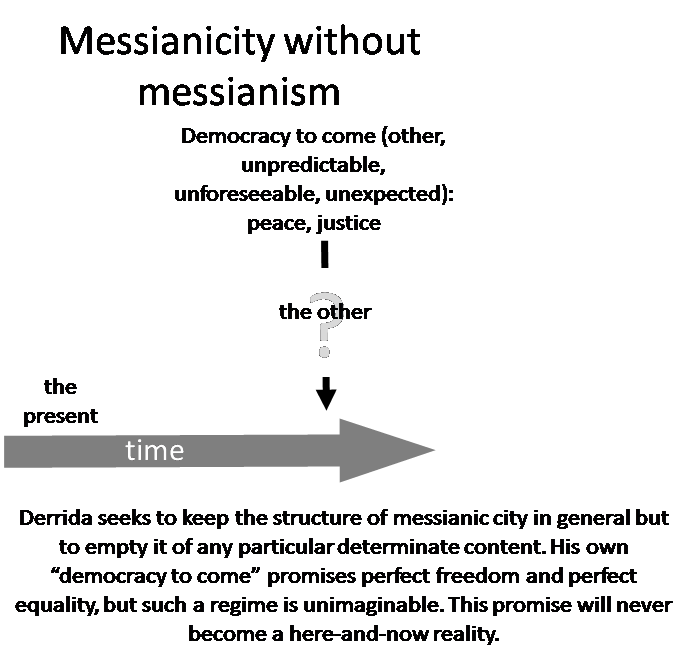
In a previous post I introduced the very idea of Diagramming Derrida before explaining his notion of différance diagrammatically. In this post I set out to tackle the idea of “messianicity without messianism” and, more generally, Derrida’s characteristic motif of “x without x”, for example “religion without religion” or “God without God”. Messianism as Derrida understands it
-
Research Hacks # 5: Microsoft Word macros for academics
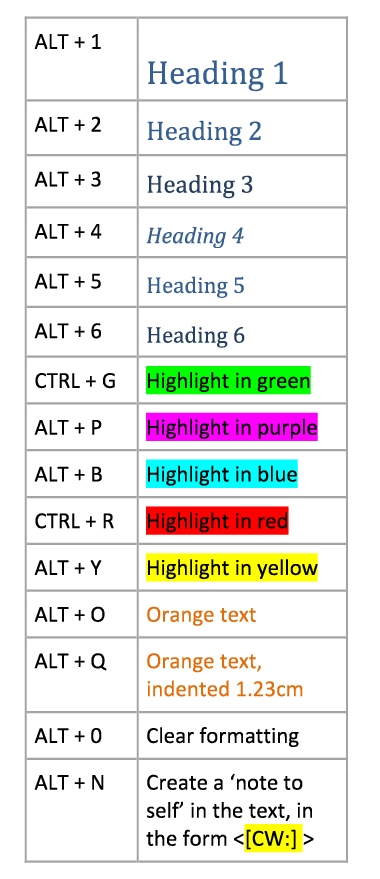
One of the sweetest time-savers I have discovered over my years as an academic is the Microsoft Word macro. Macros are ways to automate common tasks in Word. They save you time, clicks and button presses, all of which allows you to keep your mind on the content of your writing rather than on its
-

Explaining Derrida with Diagrams 1: Différance
I’ve written a book on Derrida which is intended to be accessible to non-philosophers, and one of the challenges is to explain Derrida’s thought both faithfully and clearly. I have decided to use diagrams as one way of helping readers to grasp what Derrida is saying and, equally importantly, what he isn’t saying. I am
-

Research Hacks #4: One important question to increase the focus of your academic research
Strange as it may sound, it is easy to drift along in academia without focus. You would think that, with the long hours and hard work involved in research and publishing, every academic would know exactly where they are going and the best way to get there. Not so. There are so many pressures on
-

Research Hacks #3: Help! I can’t settle on a research project
It might sound stupid: You know you want to embark on a research project, you might even know you want to pursue a career in academia, but you just can’t settle on an Honours/Masters/PhD project. In addition to asking the three key questions in research hack #2, I want to help you by providing a cheat
-

Research Hacks #2: Three important questions to ask before you choose a new research project
In this second post on building your effectiveness as a researcher I want to share three key questions that can help you choose and refine a research project: What research do you enjoy? What research do you think is important? What research conversation do you want to join? Let’s take them one by one.
-

Research Hacks #1: Research Audit
In this new series of posts I want to help you become better researcher and a better student by sharing with you some of the strategies and research hacks I have picked up over my years of conducting academic research and teaching graduates and undergraduates. In my own time as a student, PhD candidate, Junior
-
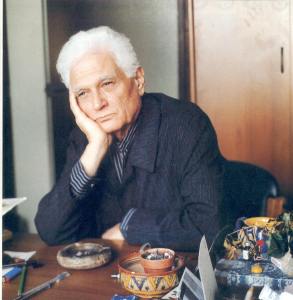
Can you help me subtitle my book on Derrida? Describe him in five words or fewer
I have a little book on Derrida coming out later this year, aimed at an advanced undergraduate and postgraduate readership and accessible to non-philosophers. Its aim is to explain Derrida’s thought as clearly and faithfully as possible using diagrams and examples, and then to bring him into conversation with the prologue of John’s gospel in the
-

A quick note to my subscribers
Hi! I’ll make this as quick as I can; I know you’re busy… First of all, thanks for following my updates! I hope you find the topics interesting and I’m always open to feedback. Over the past week I’ve migrated christopherwatkin.com from WordPress.com to WordPress.org. I’m excited about the possibilities this opens up for
-
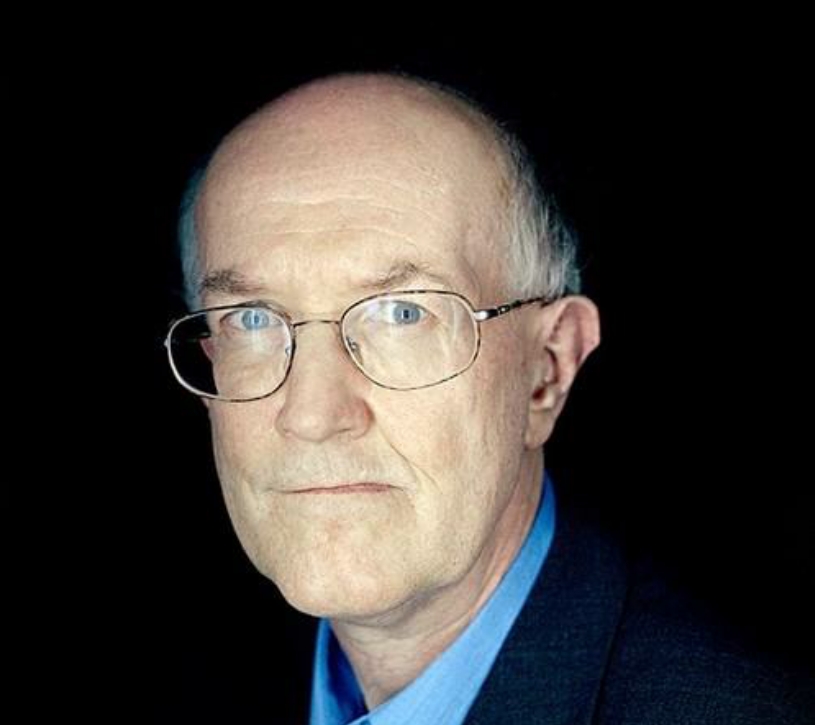
Marcel Gauchet in discussion in Melbourne: The Crisis of Democratic Politics
Here is news of an exceptional event in Melbourne, with Marcel Gauchet on democracy, crisis, and–no doubt–Trump: 27 th January 2017, Time: 6.30 pm. RMIT University, City Campus School of Business and Law lecture theatre Building 13 Level 3 Room 9 Address: 379-405 Russell St, Melbourne. Map Event blurb: This event is part of the French Festival
-
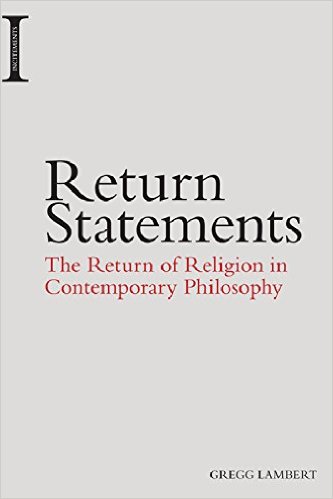
The Return of Religion, Kettle Logic, and the Secular Dilemma
At this year’s Australasian Society of Continental Philosophy conference I had the pleasure of responding to Gregg Lambert’s new book Return Statements: The Return of Religion in Contemporary Philosophy. I chose to focus on the very idea of the “return of religion”, its multiple senses, and their potential conflicts. The paper is downloadable from academia.edu and
-
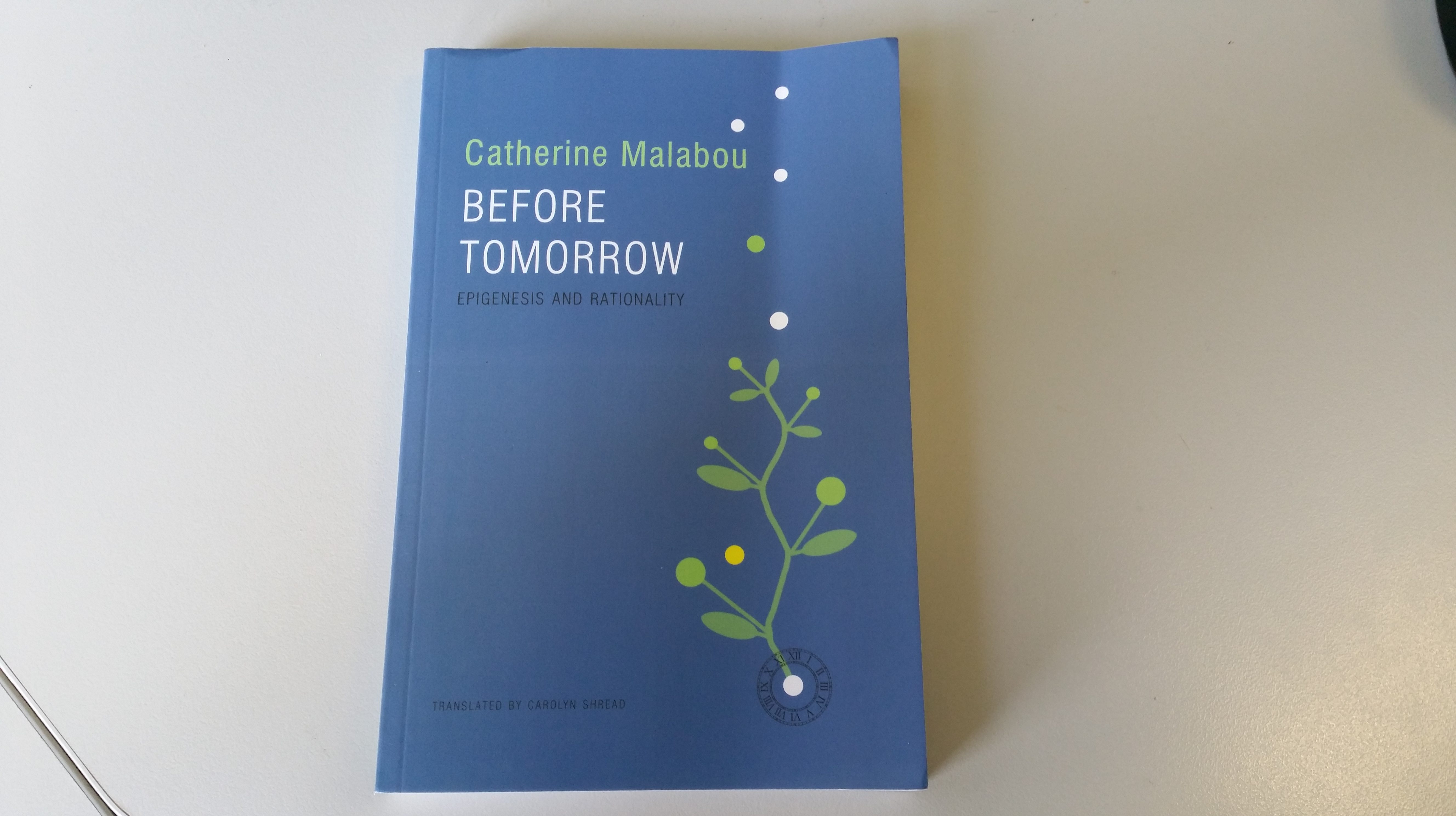
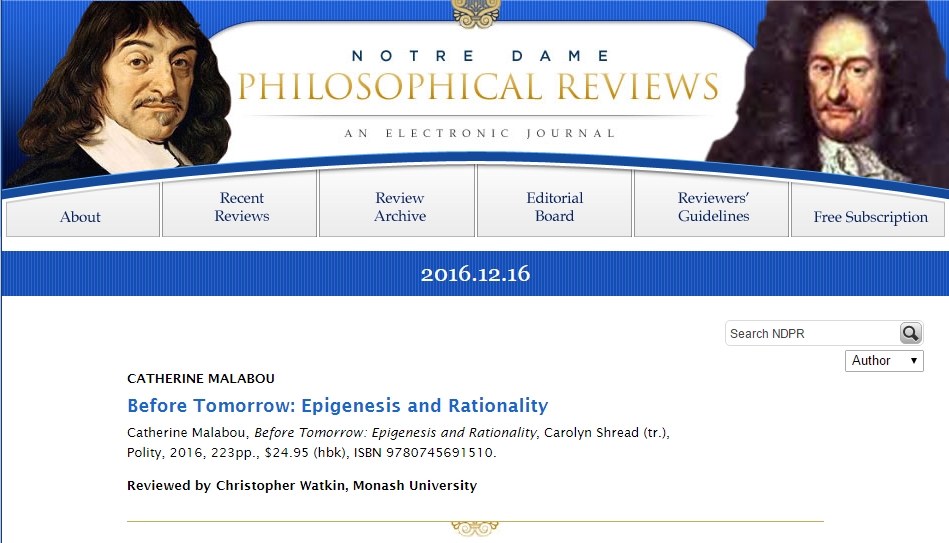
Just received: Malabou’s Before Tomorrow to review for NDPR
Pleasant surprise waiting for me at work this morning: Catherine Malabou’s Before Tomorrow to review for @NDPReviews. I worked with the French for the two chapters on Malabou in French Philosophy Today, and I’m looking forward to the translation.
-
French Philosophy Today to join Difficult Atheism on Edinburgh Scholarship Online
I’ve just learned that French Philosophy Today will shortly join Difficult Atheism on Edinburgh Scholarship Online. This, I hope, will come as good news to at least some of those who have been in touch with me about the price of the hardback edition.
-
Difficult Atheism reviewed in Derrida Today
The latest issue of Derrida Today includes a review of my Difficult Atheism by Christina Smerick. You can read the whole review online for free here. Watkin’s thesis is bold and unapologetic, and shapes the path of his reading and thinking with intense focus. His main concern, bordering on a battle cry, is that the ground gained by atheism
-
French Philosophy Today reviewed at NDPR
French Philosophy Today has just been reviewed over at Notre Dame Philosophical Reviews. Here are some highlights: Gilles Deleuze and Félix Guattari’s famously defined philosophical production as concept creation. If they are correct, then Watkin’s work is not just a scholarly commentary of philosophy but also itself an inventive philosophical work. If Alain Badiou, the
-
French Philosophy Today: Summary of Chapter 6 – Bruno Latour
This is the sixth in a series of posts providing short summaries of the chapters in my latest book, French Philosophy Today: New Figures of the Human in Badiou, Meillassoux, Malabou, Serres and Latour. For further chapter summaries, please see here. Chapter 6 considers the figure of the human that emerges in Bruno Latour’s An Inquiry into Modes
-
French Philosophy Today: Summary of Chapter 5 – Michel Serres
This is the fifth in a series of posts providing short summaries of the chapters in my latest book, French Philosophy Today: New Figures of the Human in Badiou, Meillassoux, Malabou, Serres and Latour. For further chapter summaries, please see here. With Michel Serres’s universal humanism (Chapter 5) the argument returns to the question of host capacities in
-
French Philosophy Today: Summary of Chapter 4 – Malabou, The Epigenetic Human
This is the fourth in a series of posts providing short summaries of the chapters in my latest book, French Philosophy Today: New Figures of the Human in Badiou, Meillassoux, Malabou, Serres and Latour. For further chapter summaries, please see here. Chapter 4 turns to the question of human identity over time in Malabou. After setting out the
-
Jean-Luc Nancy and Visual Culture just published, with my chapter on Nancy, dance and equality
Just published: Nancy and Visual Culture. Here is the abstract for my chapter, entitled “Dancing Equality: Image, Imitation and Participation”. ‘We are facing a very new demand in terms of art’ remarks Nancy in Allitérations, ‘the demand that art be “made by everyone”’. And yet we also know very well that the arts require individuality, singularity
-
French Philosophy Today: Summary of Chapter 3 – Malabou, The Plastic Human
This is the third in a series of posts providing short summaries of the chapters in my latest book, French Philosophy Today: New Figures of the Human in Badiou, Meillassoux, Malabou, Serres and Latour. For further chapter summaries, please see here. The transition from Badiou and Meillassoux to Malabou leads us away from a host capacity
-
My review of Ignaas Devisch’s Jean-Luc Nancy and the Question of Community now available on the H-France website
My extended review of Ignaas Devisch’s excellent Jean-Luc Nancy and the Question of Community has just been published on the H-France website. The PDF can be downloaded here.
-
Talk in Melbourne on Aug 5 – Varieties of Contemporary Atheism: Badiou, Nancy, Meillassoux
On August 5 at 11am I will have the pleasure of speaking at the Melbourne University of Divinity philosophy seminar on the subject “Varieties of Contemporary Atheism: Badiou, Nancy, Meillassoux”. The talk seeks to synthesise and develop some of the main lines of thinking from Difficult Atheism and to open the argument of the book to
-
French Philosophy Today: Summary of Chapter 2 – Meillassoux
This is the second in a series of posts providing short summaries of the chapters in my latest book, French Philosophy Today: New Figures of the Human in Badiou, Meillassoux, Malabou, Serres and Latour. For further chapter summaries, please see here. Chapter 2 continues exploring the contemporary permutations of the host capacity account of humanity
-
French Philosophy Today: Summary of Chapter 1 – Badiou
Over the coming days I will be posting brief summaries of the argument of French Philosophy Today: New Figures of the Human in Badiou, Meillassoux, Malabou, Serres and Latour, chapter by chapter. Here is the main argument of Chapter 1, on Badiou. This first chapter probes the limits of Badiou’s “formalised inhumanism”. It argues that it
-
In this Sunday’s Age and Sydney Morning Herald I’m quoted talking about robots, consciousness and Descartes
With the publication of my book on contemporary limits and transformations of humanity coming out next month I had the chance this week to talk with John Elder of The Sunday Age about the future possibility of rights for robots. John’s article came out today in The Sunday Age and the Sydney Morning Herald, with the title “What happens
-
Michel Serres’s The Parasite: A Reader’s Guide. 148 page document to download
Over the past few weeks I have been working my way through Michel Serres’s 1980 Le Parasite: a dense, poetic, brilliant text that seeks to tear down and rebuild the way we think about everything. In reading the book I kept a running list of intertexts to which Serres refers, a document that runs to some
-
Third Derrida Podcast: Derrida, Atheism and Theology
The third of the podcasts on Derrida and Reformed theology has now been released. The first considered questions of metaphysics and the second focused on Derrida’s ethics; this final podcast discusses Derrida’s engagement with theological themes. I begin by discussing Derrida’s cautious affirmation that “I rightly pass for an atheist”, and try to dismantle the myth that, for
-
Second in the Derrida and Reformed Theology Podcast series: Derrida’s Ethics
In this episode I talk very briefly about the growing willingness to accept, from the mid 1990s onwards, that deconstruction is indeed ethical, before tackling the myth that Derrida is a relativist. I unpack the phrase “tout autre est tout autre” (“every other is wholly other”) from Derrida’s reading of Kierkegaard on Genesis 22 and
-
Cover proofs of French Philosophy Today, and endorsement by Clayton Crockett
Here are the newly minted cover proofs for French Philosophy Today, with the blurb and an endorsement by Clayton Crockett: ‘In this important book Christopher Watkin shows us the transformations of the human in the work of five contemporary philosophers who exceed the limits of post-structuralism. His treatments of Badiou, Meillassoux, Malabou, Serres and Latour
-
A diagrammatic snapshot of French philosophy from Magazine Littéraire, September 1977
Today I was given a copy of this edition of the Magazine Littéraire from September 1977 (thank you Philip). Its centrefold is a diagram seeking to represent flows of influence between contemporary philosophers. The table provides a fascinating snapshot… Marx is top and centre, flanked by Freud and Nietzsche. Influences are split between the two poles of
-
French Philosophy Today: New figures of the Human, low-res cover
Today I received the first low resolution mock-up of the cover for my new book: French Philosophy Today. New Figures of the Human in Badiou, Meillassoux, Malabou, Serres and Latour. Many thanks to Rebecca Mackenzie and Julien Palast for your wonderful work.
-
Interviews with two Monash colleagues: Poet and novelist Ali Alizadeh, and linguistician Alice Gaby
As part of a new role helping develop and foster research in the School of Languages, Literatures, Cultures and Linguistics (LLCL) at Monash, I am conducting an occasional series of interviews with colleagues about how their current research projects fit into the bigger picture of the questions and themes that run through their work. The
-
My article on Michel Serres, Biosemiotics and the “Great Story” of the Universe published in SubStance
My article “Michel Serres’ Great Story: From Biosemiotics to Econarratology” has just been published in SubStance. It is available from institutions with a subscription to Project Muse here. Abstract: In four key but as yet untranslated texts from 2001-2009, Michel Serres builds on his earlier biosemiotics with an econarratology he calls the ‘Great Story’ (Grand