Code and apps
-

Spaced Repetition and AI: A Data-Driven Approach to Vocabulary Learning
Language learners often face a familiar frustration: memorising vocabulary feels easy in the moment, but the words quickly fade from memory. Traditional vocabulary lists and last-minute revision rarely lead to long-term retention. To address this problem, I recently developed a vocabulary learning aid designed to help students organise and review the words they are learning
-
Teaching hacks #1: Quick way to bulk create, name, populate and share Google docs from a list of names and emails
Univeristy lecturers sometimes need to create a Google doc for every student in a unit containing information or sections for the student to complete, and share each document with a specific student. A hyperlinked list of the documents is then added to the LMS, and each student can access only their own document and add
-
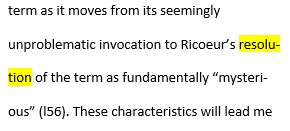
Research Hacks #25: Another time-saving Microsoft Word macro for academics
Small time-saving computer shortcuts are great news for at least two reasons. First of all, as we research and write week after week the seconds saved with each shortcut add up to substantial gains. Secondly, it is helpful for maintaining concentration if we can minimise unnecessary clicks and key-presses. So in this post I want
-

Research Hacks #23: Three Microsoft Word macros for quick mark-up of articles, essays and thesis chapters
I have the pleasure of reading a lot of student essays and supervising a number of research students, and over the years I have found that marking up an essay or thesis chapter before I read it helps me to focus and read effectively. The technique also speeds up the reading of articles in Microsoft
-
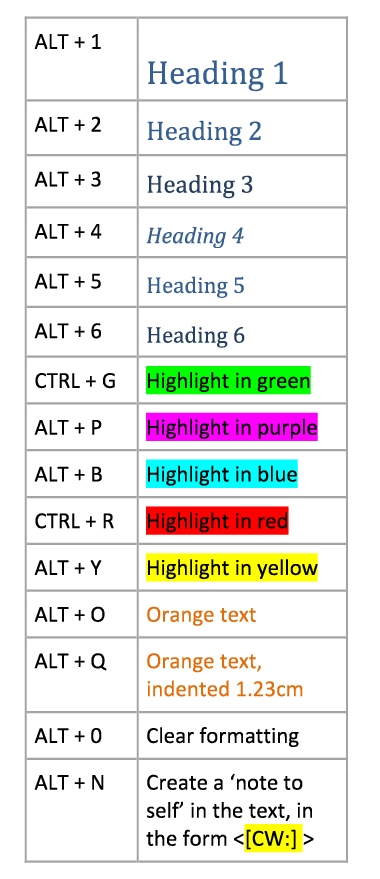
Research Hacks # 5: Microsoft Word macros for academics
One of the sweetest time-savers I have discovered over my years as an academic is the Microsoft Word macro. Macros are ways to automate common tasks in Word. They save you time, clicks and button presses, all of which allows you to keep your mind on the content of your writing rather than on its
-
New Accumulator Test for Excel-based Vocabulary Learning Tool
I have added a new “Accumulator” test to Vocab Book, the Excel-based vocabulary learning tool I wrote last year. The new test simulates a tried and tested learning method: Imagine a vocab book in two columns with English words or phrases on the left and their target language translations on the right. At school I used
-
Michel Serres app now available on Google Play
I’ve written a little app to aggregate information from around the web (news, Twitter, Youtube, Google Scholar, Google Trends…) on Michel Serres. It’s nothing flash but it allows me quickly to scan various sources to see if there’s anything new on Serres, without having manually to visit plural URLs. It is free to download from
-
Suite of Excel-based study aids to download: Vocab Book, Revision Aid and Memorise It
I have now finished writing the suite of three Excel-based learning tools I’ve been working on for the past few weeks, and on this page I want to bring them together, summarise what they can do, and offer all the download links in one place. Vocab Book Vocab Book is a powerful, fully-featured vocabulary
-
First Vocab Book testimonials
Many thanks to those who have been using and testing Vocab Book. I have ironed out a couple of minor bugs. Thanks too to those who have sent through encouraging words about the workbook. Here are two of the first testimonials: I love the Excel vocab book […] I have sent the link to my Mum,
-
Free new revision aid software – helps you learn dates, facts, formulae, equations and anything you can express as text
As a complement to Vocab Book and Memorise It, I have written a third Excel-based study tool, called Revision Aid. Here is the blurb: Revision Aid is a free excel-based workbook to help you revise for tests and exams. You can use it for testing yourself on anything that can be expressed in a question
-
Free new Excel-based memorisation aid and self-tester
As a spin-off from Vocab Book I have written a memorisation aid called Memorise It. Here is the blurb: Memorise It is a free Excel-based memory tool that helps you to remember facts, poetry, lines for a play, or any other text you need to commit to memory. Test yourself on your memory texts in
-
Powerful and fully-featured Excel-based vocabulary learning tool
I have written an Excel workbook to help university students, school pupils and the rest of us to organise, learn and test knowledge of vocabulary and phrases in sixteen languages. It sits alongside its sister workbooks Memorise It and Revision Aid (for more information about the suite of workbooks, see here). Here is the blurb: