ecology
-
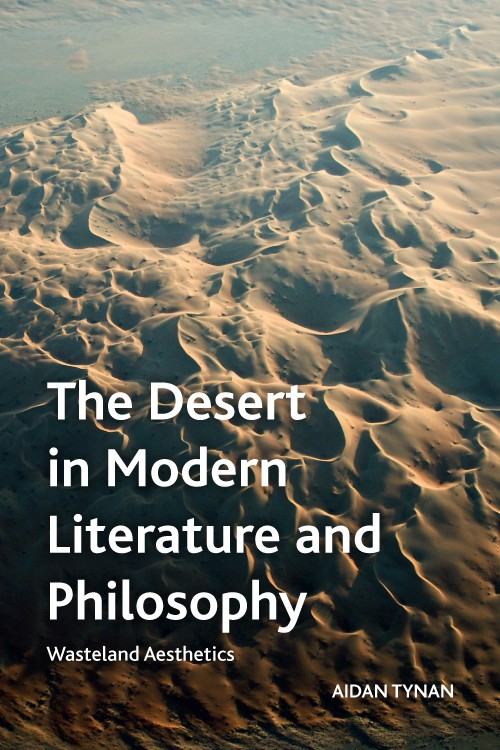
Interview with Aidan Tynan about his new book The Desert in Modern Literature and Philosophy
Recently I interviewed Aidan Tynan about his book The Desert in Modern Literature and Philosophy, an excellent new addition to the Edinburgh University Press Crosscurrents series. Chris Watkin: What first drew you to contemplate the desert? Was there one book or encounter that originally led you to the importance of this motif? Aidan Tynan:
-
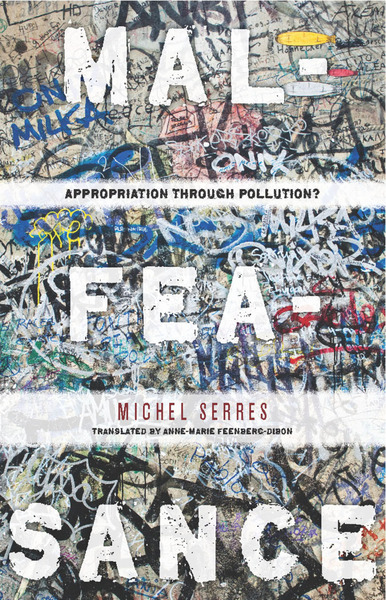
Why Michel Serres is, and is not, an ecological thinker
In this excerpt from Michel Serres: Figures of Thought I address the question of whether Serres should be considered an “ecological” thinker.
-
Bookending the crisis of modernity: Latour is finishing what Nietzsche mistakenly started
I’m currently writing the final chapter of The Human Remains, addressing Bruno Latour’s modes of existence project and work on Gaia in relation to Serres, Malabou, Meillassoux and Badiou’s accounts of the human. It’s all hands to the pump and there is little time to expatiate on this blog, but I couldn’t resist quickly drawing attention to
-
Seres at SEP-FEP: Think human language, distinctiveness and responsibility metonymically, not metaphorically
Among the aspects of Serres’ paper that provoked the most animated discussion this morning was his contention, in ‘Information and Thinking’ and elsewhere, that human beings are not the only entities to think. The idea was articulated most powerfully in the snippet of the talk reproduced below: This thought returned in the final paragraph of the address:
-
Michel Serres, econarratology, and SEP-FEP in Utrecht
Here are some pictures of the stunningly beautiful city and university of Utrecht, where the Society for European Philosophy and Forum for European Philosophy (SEP-FEP) conference is currently being held. Tomorrow I am to give a paper entitled ‘Michel Serres’ “Great Story”: From Biosemiotics to Econarratology’. Here is the abstract: From the five volumes of
-
Deep Sustainability: Narrative, Religion and Ethics
Drafting the latter chapters of The Human Remains has given me occasion to think in a sustained way about the possibilities and limits of narrative identity, including how the notion can be employed beyond humanity. In addition to revisiting Paul Ricœur’s work on narrative identity I have been grappling with the way in which Michel Serres
-
Current Research: The Human Remains
I am currently working on a book provisionally entitled The Human Remains: French Philosophy in the Image of God. The first part of the book looks at the ways in which the imago dei motif is explicitly taken up in contemporary French thought. The second, longer part takes debates from the philosophical reception of the
-
Michel Serres–from Biosemiotics to Econarratology
I’m currently working on Michel Serres’ four books on humanism from 2001-2009, in which he seeks to break down the qualitative distinction between the human and the non-human in a fundamental way. In these books and elsewhere he develops what I think it is best to call an ‘econarratology’, though see the qualification of that