Jean-Luc Nancy
-

António Guterres, Jean-Luc Nancy, and the new social contract
On July 18 this year the U.N. Secretary General António Guterres added his voice to the ranks of those calling for a new social contract, entitling his 18th Nelson Mandela Annual Lecture ‘Tackling the Inequality Pandemic: A New Social Contract for a New Era’. But what does that mean? What do we want when we
-
My paper “Nancy is a thinker of Radical Emancipation”, with a response by Jean-Luc Nancy
A plenary talk given at the ‘Thinking with Jean-Luc Nancy’ conference, University of Oxford, 29 March 2019. 1. Nancy against the emancipation narrative It is not an uncommon view, and it is one fuelled in part by Nancy himself, that his thought is inimical to an agenda of emancipation and liberation. He treats the
-
Abstract for Thinking with Nancy conference: Nancy is a thinker of radical emancipation
I have just finished the abstract for my talk at the Thinking with Nancy conference in March. The talk forms part of a larger project on the modern ’emancipation narrative’ I am currently beginning. The larger project will examine the origins and prospects of modern Western ideas of emancipation through engagements with philosophy, literature and
-

What is a theological concept? Part 4: Jean-Luc Nancy’s “something in Christianity deeper than Christianity”
In the previous post I explored Nancy’s reading of Badiou’s interruption of the mytheme by the matheme as a theological moment in Badiou’s thought. But what about Nancy himself? Does his own atheism—for atheist he indeed professes to be, providing that atheism is understood in a way that avoids the Christmas projection—avoid theological concepts? In
-

What is a theological concept? Part 3: Alain Badiou’s interruption of the mytheme by the matheme and Jean-Luc Nancy’s “Christmas Projection”
In this third post in the “what is a theological concept?” series I focus for the first time on a specific philosophical moment: Alain Badiou’s account of the interruption of the mytheme by the matheme. I am particularly interested in Jean-Luc Nancy’s reading of this Badiouian move, for Nancy sees in the interruption of the
-
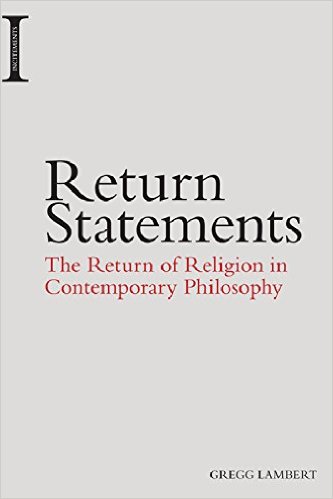
The Return of Religion, Kettle Logic, and the Secular Dilemma
At this year’s Australasian Society of Continental Philosophy conference I had the pleasure of responding to Gregg Lambert’s new book Return Statements: The Return of Religion in Contemporary Philosophy. I chose to focus on the very idea of the “return of religion”, its multiple senses, and their potential conflicts. The paper is downloadable from academia.edu and
-
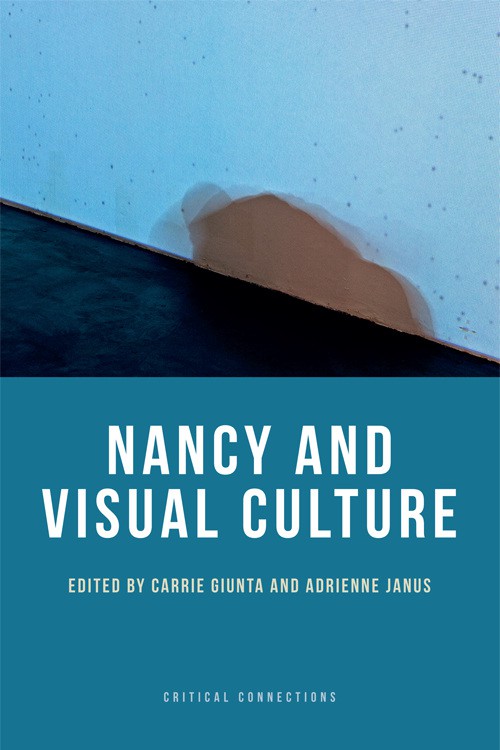
Jean-Luc Nancy and Visual Culture just published, with my chapter on Nancy, dance and equality
Just published: Nancy and Visual Culture. Here is the abstract for my chapter, entitled “Dancing Equality: Image, Imitation and Participation”. ‘We are facing a very new demand in terms of art’ remarks Nancy in Allitérations, ‘the demand that art be “made by everyone”’. And yet we also know very well that the arts require individuality, singularity
-
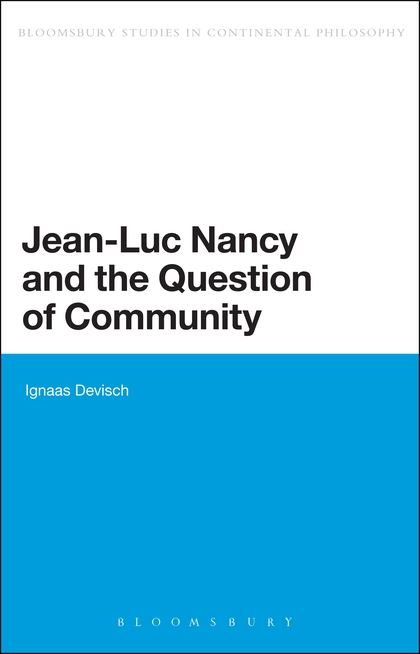
My review of Ignaas Devisch’s Jean-Luc Nancy and the Question of Community now available on the H-France website
My extended review of Ignaas Devisch’s excellent Jean-Luc Nancy and the Question of Community has just been published on the H-France website. The PDF can be downloaded here.
-
Talk in Melbourne on Aug 5 – Varieties of Contemporary Atheism: Badiou, Nancy, Meillassoux
On August 5 at 11am I will have the pleasure of speaking at the Melbourne University of Divinity philosophy seminar on the subject “Varieties of Contemporary Atheism: Badiou, Nancy, Meillassoux”. The talk seeks to synthesise and develop some of the main lines of thinking from Difficult Atheism and to open the argument of the book to
-
Article on Jean-Luc Nancy and dance now available in Korean
My article on Jean-Luc Nancy and dance entitled “When I think, I dance” has been translated into Korean and appears serialised in issues 243 and 244 of Dance Magazine MOMM. Many thanks to Philipa Rothfield and Yewoon at DanceMOMM for their collaboration. A longer title for the article would be “When I think I dance I don’t
-
New interview with Jean-Luc Nancy available online, along with “Quando penso, danzo”: Italian translation of my short essay on Nancy
The Italian translation of my piece on Nancy and dance, originally written for Melbourne’s Dancehouse Diary, is now available at logoi.ph, a new online philosophy journal. The inaugural issue also contains an interview with Jean-Luc Nancy entitled “Art Singular Plural”, available in Italian and English. My thanks to Annalisa Caputo for inviting me to be
-
A table showing who is part of the new materialism, and an argument as to why it is not a “turn”
I’m currently writing the introduction to The Human Remains, discussing the figure of the human in the new materialism. I thought I would share the table I drew up of all the thinkers identified as part of the new materialism in different monographs and collected volumes. I have excluded individual journal articles from the list
-
Seres at SEP-FEP: Think human language, distinctiveness and responsibility metonymically, not metaphorically
Among the aspects of Serres’ paper that provoked the most animated discussion this morning was his contention, in ‘Information and Thinking’ and elsewhere, that human beings are not the only entities to think. The idea was articulated most powerfully in the snippet of the talk reproduced below: This thought returned in the final paragraph of the address:
-
New review of Difficult Atheism at Marx and Philosophy
Over at Marx&Philosophy, Bryan Cooke (whom I had the pleasure of meeting at last year’s Australasian Society for Continental Philosophy conference) has posted a review of Difficult Atheism. The opening paragraph gives a flavour of the review’s tone and also of Bryan’s style, which, for all the right reasons, is best left undescribed: Christopher Watkin’s
-
Other Logics: Alternatives to Formal Logic in the History of Thought and Contemporary Philosophy
A couple of years ago I had the privilege of speaking at Lund university on the subject of Quentin Meillassoux’s treatment of the anthypothetical principle of logic in L’Inexistence divine and elsewhere. Thanks in large part to the persistent hard work of Admir Skodo, the conference papers have been reworked, expanded, and found their way
-
Question about Freud’s “Psyche ist ausgedehnt” in Derrida and Nancy
In On Touching Derrida makes much of Freud’s posthumous fragment “Psyche ist ausgedehnt; weiss nichts davon”, and the fragment is also treated in Nancy’s Corpus. As far as I can see, the translation is always given as something approximating “Psyche is extended; it knows nothing of it.” My question is this: how do we know
-
Current Research: The Human Remains
I am currently working on a book provisionally entitled The Human Remains: French Philosophy in the Image of God. The first part of the book looks at the ways in which the imago dei motif is explicitly taken up in contemporary French thought. The second, longer part takes debates from the philosophical reception of the
-
Dancehouse Diary: When I think, I dance
Last January I had the great pleasure of chatting with Philipa Rothfield about dance and philosophy, and she invited me to contribute something on Jean-Luc Nancy and dance to Dancehouse Diary, a quarterly publication by Dancehouse, the centre for independent dance in Melbourne. The piece, called ‘When I think, I dance’, deals with some of the themes in
-
Thinking Equality Today: Badiou, Rancière, Nancy
My article ‘Thinking Equality Today: Badiou, Rancière, Nancy’ has just been published in French Studies. You can click through to a PDF version from this page. The article is part of the project on humanism and anti-humanism I am working on at the moment. I argue that Badiou and Rancière both end up, despite themselves, with problematic understandings of
-
Review for NDPR – Marie-Eve Morin, Jean-Luc Nancy
My review of Marie-Eve Morin‘s book on Jean-Luc Nancy in the Polity Key Contemporary Thinkers series has just been posted at Notre Dame Philosophical Reviews.
-
Brief comparative remarks on love in Bruno Latour’s Jubiler and Jean-Luc Nancy’s L’Adoration
In Jubiler ou les tourments de la parole religieuse (Rejoice, or the Torments of Religious Speech), Latour’s attempt to re-think religious discourse in the face of the double-click fantasy is drawn out of a consideration of lovers’ discourse, and it bears an interesting resemblance to Jean-Luc Nancy’s treatment of love in L’Adoration. Both texts