Modernism
-
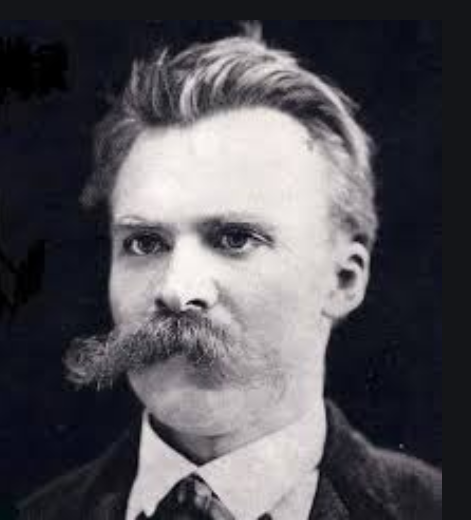
Plato’s cave, Michel Serres, and imagining Nietzsche’s madman happy
I’ve been teaching Nietzsche’s madman this week in the context of a unit on literary modernism, and there has been some fascinating discussion among the students about the solar imagery in the passage. As a contribution to that discussion, here is an extract from Michel Serres: Figures of Thought in which I compare the image of
-
Modernism Unit: Alain Badiou on Krapp’s Last Tape and “the space that lies between French and English”
To accompany the lecture on Beckett in the modernism unit, here is a lecture by Alain Badiou on Krapp’s Last Tape, in which he also reflects on “the space that lies between French and English”, a space he describes as “a perpetual torment”. He provides a commentary not only upon the play, but also on the negotiation
-
Women and Surrealism, by Chris Worth
This is a guest post by Dr. Chris Worth. One of the topics raised in the question time after Benjamin Andréo’s first lecture on Dada and Surrealism was a really good one about whether, despite their avant-garde aspirations, many of the key figures in the movements continued to take a very male-oriented to art and
-
Lu Xun, anthropophagism and 1950s sci-fi
One of the most striking motifs of ‘A Madman’s Diary’ is the anthropophagism that is first hinted at and then becomes a central obsession of the diarist. One of the first questions this raises is: “For what is eating people a metaphor in this text?”, assuming of course that it is to be read metaphorically.
-
Lu Xun, Modernism and Madness
Lu Xun’s ‘A Madman’s Diary’, one of the set texts for week on Chinese modernism in the modernism unit, raises the interesting question of the relation of madness to modernism per se. It is already becoming clear in the course that the discourse around the limits of rationality is central to many different trends within
-
Rule of thumb: use the Cambridge Companion as a jumping off point for research
If you are exploring a research topic for the modernism unit and don’t know where to start in your secondary reading, it is a good general rule of thumb to begin by seeing if there is a relevant essay in one of the Cambridge Companions. These essays provide excellent introductions to areas of a particular
-
Some useful resources on Joyce’s Dubliners
This page gives some useful preliminary pointers to studying James Joyce’s Dubliners. The “selected web links” section looks particularly useful.
-
Kafka’s ‘A Report to an Academy’ and the authoritative discourse of the liminally human
Perhaps it is because I have just finished the delightfully written To the Lighthouse, but reading Kafka’s ‘A report to an academy‘ this week for the up-coming modernism unit I am struck by the ambiguous narratorial position of the ‘former ape’ giving the report. Kafka’s brilliant conceit positions the speaker on the limits of humanity,
-
The excess of meaning over language in Woolf’s To the Lighthouse
The uneasy relation of language to meaning that is characteristic of much modernism punctuates Woolf’s To the Lighthouse. Taking walk with “the atheist” Charles Tansley, Mrs. Ramsay, tired of being talked at, begins to let her mind wander in a way that detaches Tansley’s words from their intended meaning, first with the words taking on
-
We learn of Mrs Ramsay’s death in a subordinate clause
Given the length at which To the Lighthouse dwells on the everyday thoughts of its characters, it comes as a brutal shock to read in the grim second section that: Mr. Ramsay, stumbling along a passage one dark morning, stretched his arms out, but Mrs. Ramsay having died rather suddenly the night before, his arms,
-
Girl Moved To Tears By ‘Of Mice And Men’ Cliffs Notes (The Onion, 2006)
If you are after some light relief amid preparations for the modernism unit, read this.
-
What is love? tedious, puerile, inhumane, beautiful and necessary
In the passage below, which I present without further comment, Woolf offers her reader a glimpse into the contradictory intricacy of “love” with an astounding economy of expression: Such was the complexity of things. For what happened to her, especially staying with the Ramsays, was to be made to feel violently two opposite things at
-
Rhythming To the Lighthouse
What is ‘rhythm’? It is neither a ‘thing’ (a material object) nor necessarily related to a human action. We usually think about rhythms in time, but the term need not be temporal. The OED gives one of the definitions as ‘Regularity in the repetition in time or space of an action, process, feature, condition, event,
-
Modernism: Objects and quasi-objects in Woolf’s To the Lighthouse
This is the second in a series of two posts about the ‘subject’ and ‘objects’ of Woolf’s To the Lighthouse, in relaiton to the literary studies unit on modernism I will be teaching this coming semester. Literary criticism, in step with Cartesian dualism, has tended to operate according to a dichotomy of active subjects and
-
Modernism: Narrative point of view in To the Lighthouse
This is the first substantive post related to the unit in literary modernism I am teaching next semester. These posts are not intended to be proto-essays, nor necessarily particularly deep. I just want to jot down quick thoughts about what struck me in reading through the set texts, with the hope and intention of stimulating
-
To the Lighthouse
In preparation for the modernism unit next semester I’ll be starting Virginia Woolf’s To the Lighthouse this week. Grab yourself a copy (the OUP edition is the one we’ll be using in the unit) and read along with me.
-
Modernism: some preliminary reading
Preliminary secondary reading To give you a grounding in some of the main lineaments of modernism, you may also want to read Michael Levenson’s ‘Introduction’ to the second edition of The Cambridge Companion to Modernism (to which you have access through the university library website). If you feel the wind in your readerly sails, have a look at the