What happens when philosophy meets the fragility of the human body?
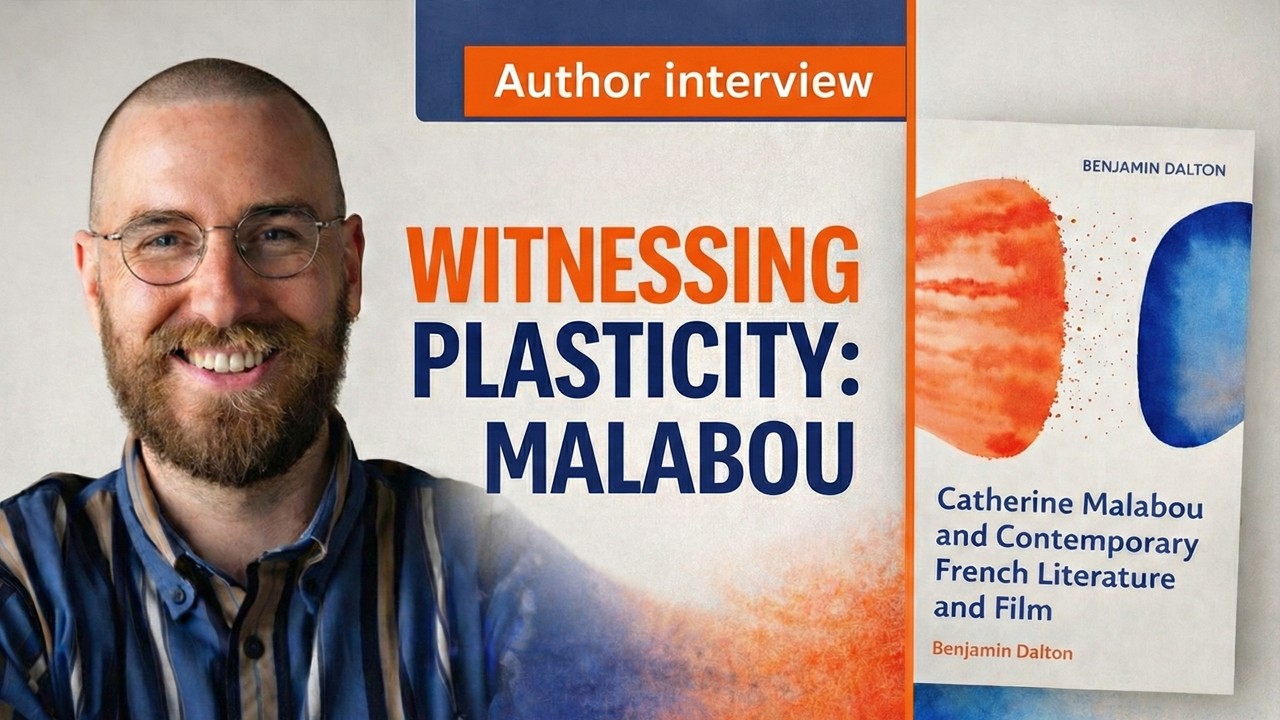
In this episode of the Crosscurrents series, I had the pleasure of speaking with Dr Benjamin Dalton about his new book Catherine Malabou and Contemporary French Literature and Film: Witnessing Plasticity. The conversation explores the provocative idea of plasticity—a concept developed by the contemporary French philosopher Catherine Malabou to describe the way our brains, bodies, and identities transform over time.
You can watch the full interview below.
Philosophy, Neuroscience, and the Transforming Body
Benjamin Dalton’s research sits at the intersection of French philosophy, literature, film, and the medical humanities. His work explores how contemporary thought engages with developments in biomedical science, particularly neuroscience, to rethink how we understand the body and the mind.
At the centre of our conversation is the concept of plasticity, a key idea in the work of Catherine Malabou. Plasticity refers to the capacity of living beings—especially the brain—to change form, adapt, and reorganise themselves over time. In neuroscience, this is visible in neuroplasticity, the brain’s ability to reshape its own neural connections. But Malabou pushes the idea much further, arguing that plasticity also describes transformations in identity, subjectivity, and social life.
Dalton’s book traces how this idea appears not only in philosophy but also in contemporary French literature and cinema, where themes of bodily transformation, identity, trauma, and mutation are explored in striking narrative and visual forms.
When Philosophy Becomes Personal
One of the most striking aspects of Dalton’s work—and of our conversation—is how philosophical ideas intersect with lived experience.
During the interview, Dalton reflects on a remarkable coincidence: his research into Malabou’s philosophy of the brain overlapped with a deeply personal experience involving brain surgery following a violent attack. That experience shaped the way he approached Malabou’s thought and gave new urgency to questions about how we live with bodies and identities that can suddenly and radically change.
Rather than treating plasticity as a purely theoretical concept, Dalton explores how literature and film help us “witness” transformation—including the unsettling possibility that illness, trauma, or neurological change may make someone appear unfamiliar even to those closest to them.
Literature, Film, and the Experience of Transformation
The book also shows how contemporary cultural works dramatise plasticity in powerful ways.
In our discussion we touch on a range of examples, including:
- the shapeshifting identities of characters in Leos Carax’s Holy Motors
- the emotional estrangement depicted in the novels of Marie NDiaye
- the strange and anarchic bodily worlds of Alain Guiraudie’s films
These works, Dalton argues, reveal plasticity not as a gentle process of self-improvement but as something far more dramatic—sometimes creative and liberating, sometimes destructive, always transformative.
Rethinking the Human in an Age of Science
The conversation also touches on a broader question: how philosophy should respond to contemporary science.
For Dalton, the encounter between philosophy and neuroscience opens new possibilities for thinking about identity, embodiment, and community. His research in the medical humanities suggests that philosophical ideas can help us rethink not only the meaning of bodily transformation but also the design of institutions such as hospitals and healthcare systems.
In this sense, plasticity is not merely a concept about the brain. It becomes a way of thinking about how human beings change—and how societies might respond to that change with greater care, creativity, and responsibility.
Watch the Interview
If you are interested in contemporary French philosophy, the medical humanities, or the cultural exploration of identity and transformation, I hope you enjoy this conversation.
The full interview is available above.